 Net Worth Ranker
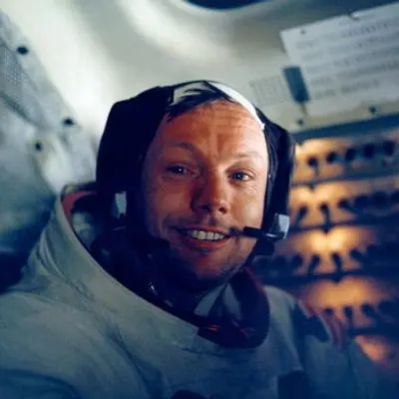



















What Is Neil Armstrong’s Net Worth?
At the time of his death in 2012, adjusted for inflation, Neil Armstrong’s net worth was estimated to be $8 million. This figure represents the culmination of his career as an astronaut, test pilot, public speaker, and corporate board member. A significant portion of his wealth was derived from his post-NASA activities, including serving on the boards of directors for various companies. These companies included Gates Learjet, Cincinnati Gas & Electric Company, Taft Broadcasting, United Airlines, and Thiokol.
Sources of Neil Armstrong’s Wealth
Armstrong’s income streams were diverse, reflecting his multifaceted career. While his salary as a NASA astronaut was modest compared to today’s standards, his post-NASA activities proved to be more lucrative. Serving on corporate boards provided a steady income, and his public speaking engagements also contributed to his wealth. Following his resignation from NASA in 1971, he took a professorial position at the University of Cincinnati, teaching in the Department of Aerospace Engineering. While his salary as a professor was not his primary source of income, it added to his overall financial stability. Further contributing to Neil Armstrong’s net worth was his role as a spokesman for businesses like Chrysler, General Time Corporation, and the Bankers Association of America.
Estate, Valuables, and the Death Lawsuit
After his death, Neil Armstrong’s assets were placed in a trust, primarily benefiting his two sons. In July 2019, his family earned $12 million by auctioning off some of his most prized possessions. These items included childhood mementos and paraphernalia earned from his historic moon landing. The Armstrong family also pursued a lawsuit against the hospital where Neil Armstrong died, accusing it of negligence. The hospital settled by paying the family $6 million, of which $5.2 million was split by his two sons, and the remainder went to his surviving siblings and grandchildren. His liquid assets primarily consisted of stock holdings in the companies for which he served as a board member. It’s important to note that while the settlement and auction proceeds augmented the family’s wealth, they were separate from Armstrong’s personal net worth at the time of his death.
Early Life and Education
Neil Armstrong was born on August 5, 1930, in Wapakoneta, Ohio, to parents Viola and Stephen. He had a younger brother, Dean, and a younger sister, June, and was of German, Scottish, and Scots-Irish ancestry. Because Neil’s father was an Ohio state auditor, the family constantly moved, living in 16 different towns throughout the state. The last move, in 1944, brought them back to Wapakoneta, where Armstrong went to Blume High School and took flying lessons at the town’s airfield. On his 16th birthday, he earned a student flight certificate. When he was 17, he started studying aeronautical engineering at Purdue University. He did not immediately finish his degree. In 1949, Armstrong became a midshipman in the Navy, pausing his studies at Purdue University. He returned after his service, graduating in 1955 with a bachelor’s degree in aeronautical engineering. This foundational education was crucial to his subsequent career and eventual financial success.
Naval Service and Korean War
In 1949, Armstrong became a midshipman in the Navy, and the next year, he became a naval aviator. He saw action serving in the Korean War, piloting the Grumman F9F Panther from the USS Essex aircraft carrier. In 1951, while making a low bombing run, Neil’s aircraft was damaged after colliding with an anti-aircraft cable, which cut off a large portion of a wing. For his duty, Armstrong received the Air Medal, two gold stars, the Korean Service Medal, the National Defense Service Medal, and the United Nations Korea Medal. After his regular commission was terminated in 1952, Neil became an ensign in the United States Navy Reserve, where he remained for eight years. While his military service provided valuable experience and training, it did not directly contribute to his long-term net worth. Instead, it paved the way for his career as a test pilot and astronaut, which ultimately led to financial opportunities.
Test Pilot Career
After the war, Armstrong returned to Purdue to complete his bachelor’s degree, graduating in 1955. Subsequently, he became a test pilot at the National Advisory Committee for Aeronautics High-Speed Flight Station at Edwards Air Force Base in California. While there, he flew chase planes and modified bombers and was the project pilot on Century Series fighters. Ultimately, Neil piloted over 200 different aircraft models throughout his career. In 1958, Armstrong became an employee of the just-formed NASA, which absorbed the National Advisory Committee for Aeronautics. While the specific salary details from his time as a test pilot are not publicly available, it is reasonable to assume that he earned a competitive salary for his expertise and experience. This position provided him with invaluable experience and exposure, which ultimately led to his selection as an astronaut.
Astronaut Program and Apollo 11
In 1960, Armstrong was chosen to participate in a program on the X-20 Dyna-Soar, a military space plane under development by Boeing; two years later, he was selected by the US Air Force as one of seven pilot-engineers to fly the vehicle when it got past the design board. Later in 1962, Neil officially applied to become an astronaut. He made his first spaceflight in 1966 as a command pilot of Gemini 8, making him NASA’s first civilian astronaut to fly in space. Along with pilot David Scott, he performed the first docking of two spacecraft. In his final assignment in the Gemini program, Armstrong served as a backup command pilot for Gemini 11. Following his role as a backup commander for Apollo 8, Armstrong was offered the post of commander of Apollo 11 in 1968. On July 21, 1969, Neil and Buzz Aldrin, who was the pilot of the Apollo 11 Lunar Module, became the first people to land on the Moon. While Armstrong’s salary as an astronaut was not exceptionally high, the fame and recognition he gained from the Apollo 11 mission opened doors to lucrative opportunities in his post-NASA career.
Post-Apollo Career and Corporate Boards
Armstrong announced his resignation from spaceflight shortly after the Apollo 11 mission. In 1971, he left NASA and subsequently accepted a professorial position at the University of Cincinnati, teaching in its Department of Aerospace Engineering. While there, Neil taught many core and graduate-level classes, including ones on aircraft design and experimental flight mechanics. He left in 1980. Later, following the tragic explosion of the Challenger Space Shuttle in 1986, Armstrong joined Ronald Reagan’s Rogers Commission to investigate the disaster. Throughout his post-Apollo career, Neil also served as a spokesman for businesses. He worked for Chrysler, General Time Corporation, and the Bankers Association of America. Additionally, he served on the board of directors of Gates Learjet, the Cincinnati Gas & Electric Company, Taft Broadcasting, United Airlines, and Thiokol, among other companies. These board positions and spokesperson roles significantly contributed to his wealth, providing a steady income and stock options.
Personal Life and Marriage
While at a college party hosted by the fraternity Alpha Chi Omega, Armstrong met Janet Elizabeth Shannon. In 1956, they married in Wilmette, Illinois. They had three children: Eric, Karen, and Mark. In 1961, Karen was diagnosed with cancer; the next year, at the age of two, she passed away from pneumonia related to her deteriorating health. Neil and Janet separated in 1990 and divorced in 1994. He subsequently married Carol Held Knight, whom he first met at a golf tournament years earlier. The couple lived in Indian Hill, Ohio. In 2012, to relieve his coronary artery disease, Armstrong underwent bypass surgery. After developing complications, he passed away on August 25, 2012, in the hospital at age 82. A tribute was later held at Washington National Cathedral, while Neil’s ashes were scattered in the Atlantic Ocean from the USS Philippine Sea. Although details regarding the specifics of property owned by Armstrong, such as addresses, have not been disclosed publicly, It is known that he resided in Indian Hill, Ohio, during his marriage to Carol Held Knight. Neil Armstrong’s net worth does not include information about assets or wealth belonging to his spouses.